How Market Resilience Reduces Investment Risk

No investment is risk-free, but not all markets carry the same level of risk and uncertainty.
While no market is completely immune to economic cycles, some markets have consistently demonstrated a stronger ability to withstand downturns and recover over the long term. Real estate assets located in resilient markets often benefit from fundamental characteristics that support long-term performance, including diversified employment, sustained demand, limited housing supply, and continued public and private investment. These factors can contribute to stronger occupancy, healthier sales activity, and improved access to capital, even during periods of economic uncertainty.
For long-term investments, history matters. Markets that have repeatedly navigated recessions, financial crises, and changing economic conditions often provide a stronger foundation for real estate investment decisions. Although past performance does not guarantee future results, a market’s track record of recovery can provide valuable insight into how it may respond when faced with future challenges.
A Market Built On Long-Term Demand
New York City (NYC) is one of the clearest examples of a market that has demonstrated long-term resilience. As one of the world’s largest economic and financial centers, NYC has experienced multiple market cycles over the past several decades while continuing to attract businesses, residents, and investment capital. Its ability to recover from significant disruptions and continue evolving has helped establish NYC as one of the most durable real estate markets in the U.S.
Unlike many markets that rely heavily on a single industry or population trend, NYC benefits from an exceptionally diverse economic foundation. The city serves as a global center for finance, technology, healthcare, education, media, tourism, and professional services. Companies continue to establish offices and expand operations throughout the metropolitan area, while universities, hospitals, and cultural institutions attract talent from around the world. This economic diversity creates consistent demand for both residential and commercial real estate, even when individual industries experience fluctuations.
At the same time, NYC faces a persistent housing shortage. Population growth, limited developable land, and complex zoning constraints have restricted new housing construction for decades. As a result, well-located residential developments continue to benefit from underlying demand, even during periods of slower economic growth.

Long Island City: One Of NYC’s Most Dynamic Neighborhoods
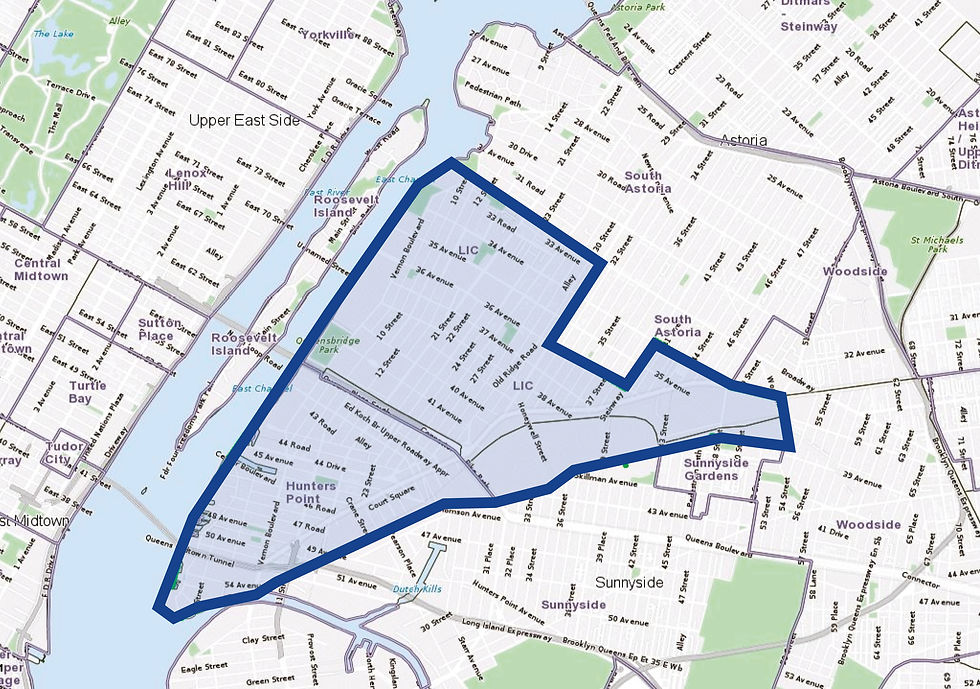
Among NYC’s residential markets, Long Island City (LIC) has emerged as one of the strongest examples of successful urban transformation and sustainable development. Located directly across the East River from Midtown Manhattan, LIC combines exceptional transportation connectivity with proximity to one of the world’s largest employment centers. Over the past decade, the neighborhood has evolved from an industrial district into a vibrant, mixed-use community featuring:
Modern, luxury residential towers
Office developments
Retail and restaurants
Waterfront parks
Cultural institutions
Growing technology and creative industries
Major employers such as Bloomingdale’s, JetBlue, MetLife, and numerous technology and life science companies have established a presence in and around LIC, contributing to continued housing demand. Significant investment in transportation, infrastructure, and public spaces has further strengthened the neighborhood’s long-term appeal.

A Rare Advantage: Strong In Both Sales & Rental Markets
Many real estate markets depend heavily on a single segment of housing demand. Some neighborhoods are primarily driven by condominium buyers, while others rely largely on rental demand. When economic conditions shift, weakness in that single segment can create challenges for developers and investors.
LIC offers a different dynamic. What distinguishes the neighborhood is not only its rapid growth, but also the diversity of its residential demand. LIC has developed into a market supported by both condominium buyers and renters, creating greater flexibility throughout different stages of the real estate cycle.
Strong demand from both owner-occupants and renters allows developers to adapt to changing market conditions. During periods of strong buyer demand, projects may benefit from condominium sales activity. During periods when rental demand is stronger, the depth of the rental market provides another source of housing demand.
For long-term real estate developments, this flexibility can help reduce exposure to shifts in any single market segment. Combined with NYC’s structural housing shortage, diverse employment base, and global appeal, LIC has established itself as one of the city’s most dynamic and resilient residential markets.

Strong Condominium Demand
Despite elevated interest rates affecting housing markets nationwide, condominium activity in LIC has remained active.
According to SERHANT’s Q2/2025 market report, closed condominium sales increased more than 63% YoY, rising from 106 transactions in Q2/2024 to 173 transactions in Q2/2025. While the median sale price moderated to approximately $959,000, the increase in transaction volume reflected continued buyer interest, particularly for well-located and well-positioned developments.
LIC continues to rank among Queens’ most active and highest-valued condominium markets. According to the Brown Harris Stevens Q1/2026 Queens Residential Market Report and Modern Spaces’ Q1/2026 market data, the neighborhood has continued to demonstrate steady demand despite broader market fluctuations.
The moderation in pricing should also be viewed within the context of a changing market environment. As additional newly completed developments entered the market, buyers gained access to a wider range of inventory while maintaining purchasing activity. This type of market normalization can represent a healthier adjustment compared to markets driven solely by rapid price appreciation.
One Of NYC’s Strongest Rental Markets
LIC’s rental market has remained one of the strongest in NYC, supported by its location, transportation accessibility, employment base, and modern residential inventory.
According to the MNS Queens Rental Market Report (June 2026), LIC remained the strongest rental market in Queens. Average asking rents increased 0.45% MoM, and LIC recorded the highest average rents across every major apartment category:
Studios: approximately $3,776/month
One-bedroom units: approximately $4,402/month
Two-bedroom units: approximately $6,554/month
LIC was also the highest-priced neighborhood among the eleven Queens submarkets tracked by MNS, highlighting its continued appeal among professionals seeking convenient access to Midtown Manhattan, modern amenities, and a vibrant urban lifestyle. More broadly, Queens rental prices increased 4.52% YoY, reflecting sustained demand even as additional housing supply entered the market.
Final Thoughts
EB-5 investment is ultimately a long-term financial commitment. While market conditions will inevitably change, the strength of the underlying market can play an important role in determining how a project navigates different economic environments.
Markets with diversified economies, limited housing supply, strong employment drivers, and demonstrated demand across multiple segments may provide a more stable foundation for long-term real estate development.
NYC’s history of recovering through multiple economic cycles demonstrates the importance of investing in markets with durable fundamentals. Within NYC, Long Island City represents a compelling example of how strategic location, infrastructure investment, and diversified residential demand can support long-term growth.
For investors evaluating EB-5 projects, the quality of the underlying market remains an important consideration. While every investment requires careful evaluation of its own structure, strategy, and risks, projects located in established and adaptable markets may be better positioned to navigate uncertainty and pursue long-term success.

Speak with our EB-5 specialist and learn how the program can help you achieve permanent residency.