
Microsoft’s Voluntary Exit Offer: What H-1B Employees Need to Know


On October 26, Microsoft announced a voluntary exit offer for eligible employees in selected teams in the United States, Canada, the United Kingdom and India. About 60,000 employees are eligible, according to TechCrunch. Microsoft has not reported how many will accept.
For employees working in the United States on H-1B visas, one detail deserves attention before signing: when will employment officially end?
Severance and the H-1B Timeline
Under current USCIS rules, an eligible H-1B worker whose employment ends may receive a discretionary grace period of up to 60 consecutive days, or until their authorized stay expires, whichever comes first. The rule can apply to both voluntary departures and layoffs.
The grace period generally begins the day after employment ends. A later severance payment does not, by itself, establish that employment continued until that payment date. Employees should confirm their effective termination date, whether they will remain on payroll as employees for any period, and the expiration date on their Form I-94 with HR and immigration counsel.

DHS proposed eliminating the 60-day grace period in September. The proposal has not taken effect. ARCFE’s H-1B grace period update explains the current rule and the proposed change.
Before You Accept: Three Checks
Your immigration dates. Compare the termination date with your Form I-94 and H-1B approval notice. Do not calculate your timeline from the date a severance check arrives.
Your next filing. If you have another job offer, ask the prospective employer and counsel about a timely H-1B petition. Eligible workers may be able to begin the new job once USCIS receives a properly filed qualifying petition. The grace period itself does not authorize work.
Your pending green card case. If Microsoft has filed—or is preparing—a PERM application or Form I-140 for you, find out what leaving would mean for that case before signing.
Where EB-5 May Fit
A job change can also be a useful time to review a family’s longer-term immigration plan. EB-5 does not require an employer to sponsor a job or complete PERM. For eligible investors already in the United States, concurrent filing may allow Form I-526E and Form I-485 to be filed together when an immigrant visa is available. Applicants may also seek employment authorization and advance parole, but filing the applications does not itself authorize work or preserve H-1B status.
For India-born professionals, the distinction may be particularly relevant given the long EB-2 and EB-3 queues. The published November 2026 Visa Bulletin lists the reserved EB-5 categories as current for India; availability must be checked again when filing. EB-5 investment minimums are scheduled to adjust on January 1, 2027.
ARCFE’s guide for H-1B professionals explains how EB-5 can fit alongside an existing employment-based plan. Anyone considering Microsoft’s offer should have an immigration attorney review the exit agreement and filing timeline before making a decision.
Cover illustration: iCross × ARCFE. Federal regulation screenshot: U.S. Electronic Code of Federal Regulations.
This article provides general information and is not legal, immigration, tax or investment advice. Eligibility and timing depend on individual circumstances.
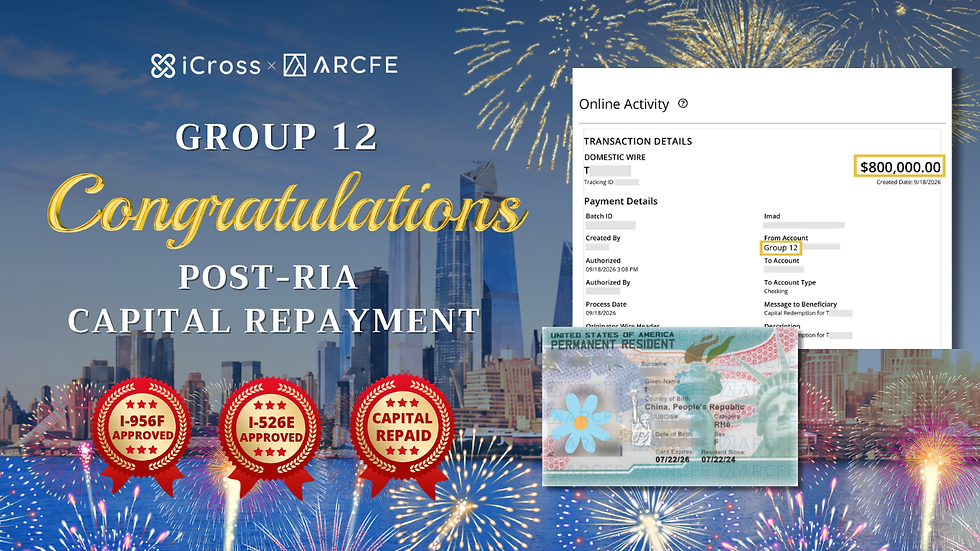
Recent ARCFE EB-5 Principal Repayment Highlights
Explore ARCFE’s latest EB-5 principal repayment milestones across pre-RIA and post-RIA projects. Click any image below to read the full project update.

Explore Current New York Real Estate-Backed EB-5 Opportunities


Considering EB-5 for Your Family?
Speak with an iCross × ARCFE EB-5 specialist to discuss your immigration goals, timeline, and available investment opportunities.
Related ARCFE Resources
Review important travel, residency, tax and immigration considerations after receiving a conditional green card.
Understand how senior debt, mezzanine financing and equity differ in repayment priority and risk exposure.


