PERM Suspension at Microsoft, Adobe and Six IT Firms: Which Green Card Cases Are Affected?


On October 8, 2026, U.S. officials announced a PERM suspension involving Microsoft, Adobe and six IT services companies. Labor Secretary Keith Sonderling said the Department of Labor (DOL) would stop accepting new permanent labor certification applications involving these employers and pause the processing of pending ones.
For affected employees, the immediate impact depends on where their employer-sponsored green card case stands. The announcement concerns the PERM stage; it does not, by itself, cancel an employee’s existing H-1B status or green card.

Which Companies Are Covered?
At the October 8 White House press conference, officials named Microsoft, Adobe, Cognizant, Infosys, Tata Consultancy Services (TCS), Wipro, HCL Technologies and Capgemini.
Vice President JD Vance alleged that some employers had used foreign-worker programs while laying off U.S. workers. Officials cited ongoing investigations; the announcement should not be read as a final finding against every named company. Microsoft responded that approximately 80% of its H-1B filings in the previous fiscal year involved extensions or status changes for existing employees. That figure concerns H-1B filings, rather than the PERM applications now being paused. The Associated Press reported both the announcement and Microsoft’s response.
How Does the PERM Suspension Affect Employees?
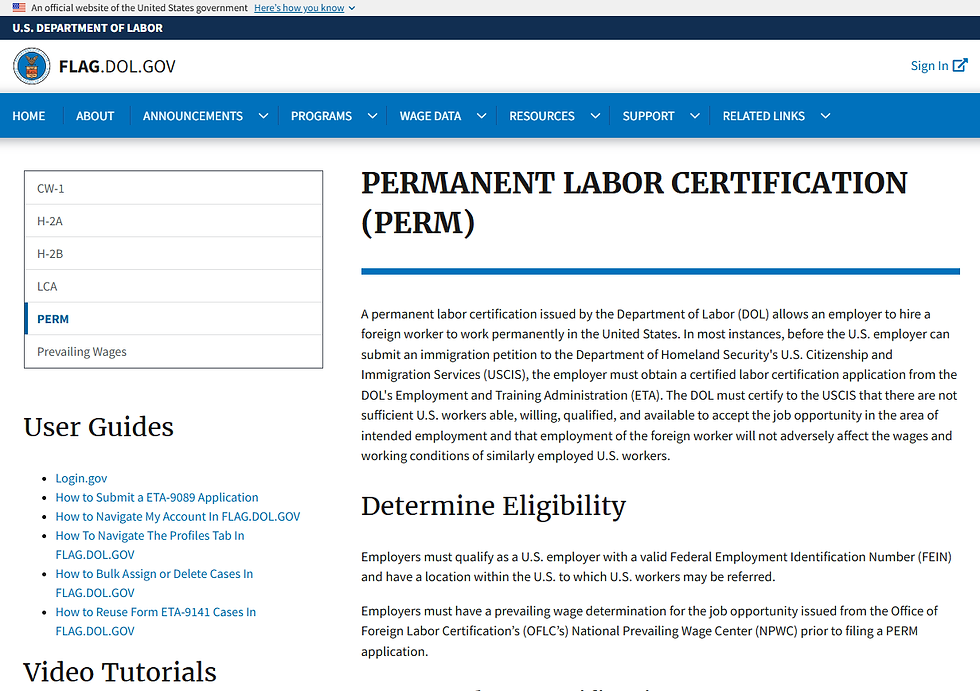
PERM labor certification is generally required before an employer can file an EB-2 or EB-3 immigrant petition for a worker. The employer must complete the required U.S. recruitment and obtain DOL certification before moving to a PERM-based Form I-140.
Current case stage | What the October 8 announcement means |
PERM has not been filed | DOL says it will not accept a new application involving one of the eight employers during the suspension. |
PERM is pending | DOL says it will not process the application while the suspension remains in place. The next PERM-based I-140 step may therefore be delayed. |
PERM has been certified or I-140 has been filed or approved | The announcement did not state that existing certifications or I-140 approvals were revoked. The employer and its immigration counsel should confirm the individual case’s next steps and any filing deadline. |
Employee holds H-1B status or already has a green card | The PERM announcement does not automatically cancel that status. Each person should continue to meet the requirements applicable to their own case. |
For professionals considering a route that does not depend on an employer’s PERM filing, ARCFE’s guide for H-1B professionals explains where EB-5 may fit into longer-term planning.
The filing stage matters particularly for some India-born EB-2 and EB-3 applicants. In a PERM-based case, the priority date generally begins when DOL accepts the labor certification application for processing. A delay before that filing may therefore affect when the employee establishes a priority date, in addition to delaying later steps. Visa availability is a separate issue shown in the monthly Visa Bulletin.
What Should Affected Employees Do Now?
First, confirm with the employer’s HR team or immigration counsel which legal entity is sponsoring the case and its exact stage. Employees with a certified PERM should also check the deadline for filing the associated I-140.
H-1B workers should review their status expiration date and any planned extension with counsel, particularly if their longer-term immigration strategy depends on a pending PERM or I-140. A change of employer or withdrawal of an existing case deserves an individual review.
Eligible professionals may also discuss pathways that do not require an employer’s PERM certification, such as an EB-2 National Interest Waiver, EB-1A or EB-5. Each has different eligibility, timing and, in the case of EB-5, investment-risk requirements. Filing a new immigrant petition alone does not extend H-1B status or grant work authorization.
At iCross × ARCFE, we help qualified families assess EB-5 projects through both immigration requirements and New York real estate fundamentals, including capital structure and potential repayment sources.
This article reflects information available as of October 10, 2026. The duration and further implementation details of the PERM suspension have not been announced. This article is for general information, not immigration, legal or investment advice. EB-5 investments involve risk; neither immigration approval nor return of capital is guaranteed.
Recent ARCFE EB-5 Principal Repayment Highlights
Explore ARCFE’s latest EB-5 principal repayment milestones across pre-RIA and post-RIA projects. Click any image below to read the full project update.


Explore Current New York Real Estate-Backed EB-5 Opportunities


Considering EB-5 for Your Family?
Speak with an iCross × ARCFE EB-5 specialist to discuss your immigration goals, timeline, and available investment opportunities.
Related ARCFE Resources
Review important travel, residency, tax and immigration considerations after receiving a conditional green card.
Understand how senior debt, mezzanine financing and equity differ in repayment priority and risk exposure.