
USCIS Can Deny Cases Without an RFE Under New 2026 Policy


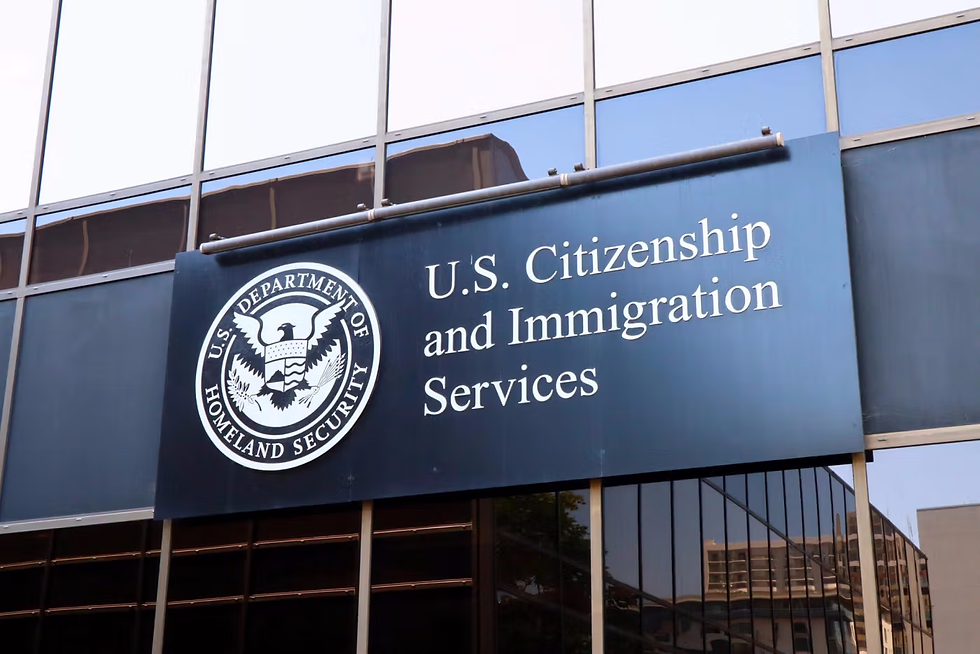
U.S. Citizenship and Immigration Services (USCIS) has restored officers’ discretion to deny certain immigration benefit requests without first issuing a Request for Evidence (RFE) or Notice of Intent to Deny (NOID). The policy took effect on August 5, 2026.

The update applies to benefit requests that were pending on August 5 as well as those filed on or after that date. According to the USCIS announcement, the agency intends to discourage incomplete or “placeholder” filings and make more efficient use of adjudication resources.
For applicants and petitioners, the practical message is straightforward: a filing should establish eligibility and include the required initial evidence when it is submitted. An RFE should no longer be treated as an expected opportunity to complete a case later.
What the 2026 USCIS RFE Policy Update Changes
Under the prior 2021 policy, officers were generally encouraged to issue an RFE or NOID when additional evidence could potentially establish eligibility. The new USCIS Policy Alert PA-2026-05 rescinds that approach and restores broader adjudicatory discretion.
USCIS may now deny a benefit request without first issuing an RFE or NOID when:
Required initial evidence is missing;
The evidence submitted does not establish eligibility for the requested benefit; or
The filing has no legal basis for approval and additional evidence would not cure the problem.
The change does not mean every incomplete or insufficient case will automatically be denied. Officers may still issue an RFE or NOID when the facts and law warrant one. The current USCIS Policy Manual chapter on evidence expressly states that officers should not avoid requesting evidence when it is needed.
This is an adjudication policy—not simply a lockbox rejection rule. A case may be accepted for processing and later denied if the record does not establish eligibility.
RFE and NOID Response Procedures Also Changed
The policy update also gives officers more flexibility to set RFE response deadlines based on the evidence requested, subject to the applicable regulatory maximum. The full 12-week maximum will no longer be used as the default in every case.
USCIS also clarified that:
A partial RFE or NOID response may be treated as a request for a decision on the existing record; and
Notices sent by mail generally receive three additional days for delivery, including notices sent outside the United States. The prior 14-day allowance for international mail no longer applies.
Applicants should therefore read every notice carefully and begin preparing a response immediately rather than assuming the longest possible deadline will be available.
What Applicants and Petitioners Should Do
Front-end preparation now carries more weight. Before filing, applicants, petitioners, and their counsel should confirm that:
The correct form edition is being used and all required fields and signatures are complete;
Filing fees and submission procedures are current;
Every item identified as required initial evidence in the form instructions is included;
The supporting record does more than check boxes—it clearly establishes eligibility for the benefit requested;
Translations, dates, financial records, employment histories, and prior filings are internally consistent; and
Enough time has been built into the filing schedule to resolve missing documents before a status or filing deadline.
The policy does not eliminate RFEs. It makes it less prudent to rely on one.
Why the USCIS RFE Policy Update Matters for EB-5 Investors
The new guidance applies broadly and is not limited to EB-5. For a regional center investor, however, Form I-526E can involve a substantial evidentiary record covering the lawful source and path of investment funds, the subscription and capital transfer, and project-related documentation.
The policy does not change the substantive requirements of the EB-5 Immigrant Investor Program. It does increase the practical importance of assembling a complete, traceable, and well-coordinated filing from the outset. ARCFE’s guide to EB-5 source-of-funds preparation explains why families should begin gathering financial records before the filing package is finalized.
Investor-side evidence should be prepared by the investor and qualified immigration counsel. On the project side, the regional center should be ready to provide organized offering, project, job-creation, and USCIS filing materials that counsel can incorporate into the petition strategy.
The ARCFE View
This policy update reinforces a principle that has always mattered in EB-5: a strong filing begins well before submission. Clear documentation, disciplined project preparation, and coordination among the investor, immigration attorney, regional center, and project team can reduce avoidable gaps and help USCIS understand the case presented.
ARCFE combines long-term EB-5 experience with the real estate credit discipline of iCross Capital. Our role is to provide carefully reviewed projects, organized project-side documentation, and responsive investor support throughout the process. Each investor should work with qualified immigration counsel to determine whether the individual filing is complete and legally sufficient.
To learn more, read How to Choose an EB-5 Regional Center, review Track Record, Transparency, and Trust: How to Evaluate an EB-5 Regional Center, or explore the ARCFE EB-5 Process.
Speak with our EB-5 specialist and learn how the program can help you achieve permanent residency. Complete the form and our team member will give you a call back.
Related ARCFE Resources


