
What Should an EB-5 Regional Center Monitor After Investment?


Short answer: After EB-5 capital is invested, an EB-5 regional center's responsibilities extend beyond sponsoring the initial offering. Project progress, use of investment funds, job creation, financing obligations and material developments all require ongoing attention.
For investors, understanding how a regional center follows an active project can be just as important as reviewing its historical track record.
A well-structured investment starts with careful project selection. Effective ongoing monitoring helps identify issues as the development moves forward and supports informed decisions throughout the investment lifecycle.
Four Areas That Matter During an EB-5 Project
For real estate-backed EB-5 projects, investors should pay particular attention to four areas:
Monitoring Area | What Investors Should Understand |
Construction progress | Is the project advancing according to its development schedule and major milestones? |
Capital deployment and budgets | Are project funds being used as intended, and how are material cost changes addressed? |
Job creation | Is the economic activity supporting the projected qualifying jobs progressing as expected? |
Financing and repayment | Are loan obligations, project cash flow and expected repayment sources being evaluated as conditions change? |
These areas are connected.
For example, a construction delay may affect project costs, the timing of economic activity and the expected repayment schedule.
The developer, lenders, fund managers and regional center may have different monitoring responsibilities and contractual rights. Investors should understand which parties oversee each function and what information is available to them.
For a related perspective on job creation, see ARCFE's EB-5 job creation cushion guide.
Why Construction and Financial Monitoring Matter
A construction update may show visible progress, but photographs alone rarely tell the full story.
Investors also benefit from knowing whether the development is meeting its schedule, whether the budget remains adequate and whether important changes have occurred.
In real estate financing, these questions help identify potential risks before they become larger problems.
A useful project update should provide context when there is a material change. For example, if construction costs increase, investors should understand how the revised budget is funded and whether the change affects the project's broader financial plan.
The same principle applies to job creation and repayment planning.
Under the EB-5 Reform and Integrity Act, regional centers are also subject to ongoing recordkeeping, annual reporting and compliance requirements. The USCIS Regional Center Policy Manual and Form I-956G Instructions describe important parts of this framework.
These regulatory responsibilities are distinct from the project-specific monitoring rights established in investment and financing documents. Regulatory reporting alone does not confer construction management authority or a lender's contractual enforcement rights.
The ARCFE Approach: Real Estate Experience Beyond EB-5
ARCFE was founded by iCross Capital, a New York City real estate financing institution with nearly two decades of experience in the local market.
That background informs how ARCFE evaluates real estate-backed EB-5 investments, bringing a lender's perspective to project selection, financing structures and ongoing project review.
Our focus extends beyond immigration eligibility to the underlying real estate transaction.
For developments in New York City, that means paying attention to the developer's experience, construction and financing arrangements, local market conditions and the project's expected sources of repayment.
ARCFE Group 21, associated with the Skyline Tower II development in Long Island City, reflects our focus on real estate-backed EB-5 opportunities in established New York neighborhoods.
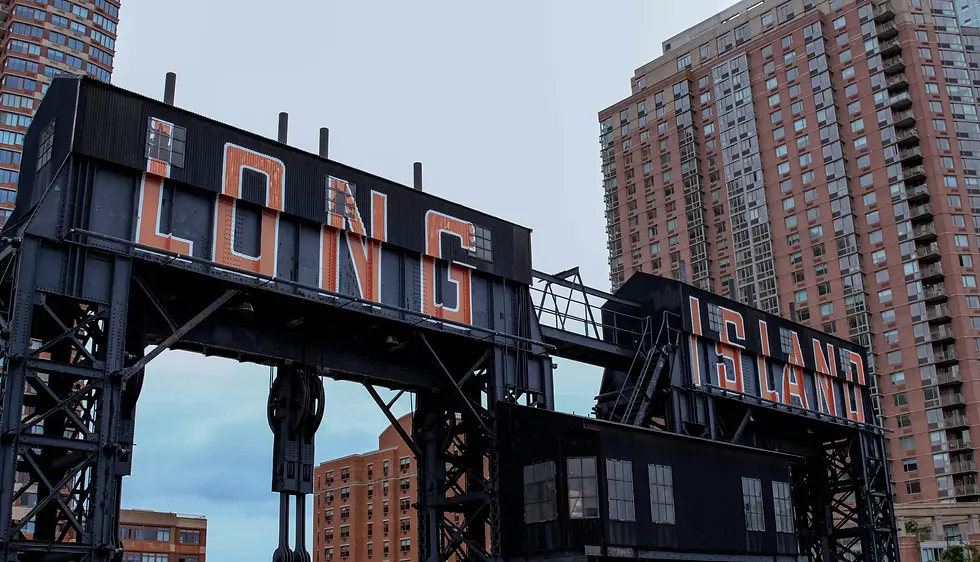
The project involves United Construction & Development Group, whose development experience includes the original Skyline Tower in Queens.
For investors evaluating Group 21, the important considerations include the project's development team, location, financing structure, job creation analysis and execution plan.
What Should Investors Expect From an EB-5 Regional Center?
Investors should understand how project information will be communicated after their capital has been committed.
Before subscribing, it is worth asking:
How frequently are project updates provided?
What information is shared about construction, funding and job creation?
How are material developments or changes communicated?
Who is responsible for monitoring the investment and maintaining supporting records?
The answers will depend on the project's structure, management arrangements and governing documents.
Transparency is particularly important in EB-5 because investments may remain outstanding for several years, while immigration and investment milestones follow different timelines.
The SEC and USCIS EB-5 Investor Alert also encourages independent review of investment documents, project claims and the parties involved.
Why Ongoing Management Is Part of the Investment Decision
An EB-5 investment does not end when the investor submits Form I-526E.
The underlying project must continue through its development and investment lifecycle, while the investor works toward the applicable immigration requirements.
For that reason, regional center experience should be evaluated through both historical results and the processes used to oversee active investments.
ARCFE's combination of EB-5 experience and New York real estate financing knowledge supports our approach to evaluating and managing projects throughout that lifecycle.
For prospective investors, understanding the team behind a project—and how that team addresses construction, financing and investment risks—is an important part of due diligence.
A project's financing position also affects its associated rights. See EB-5 Investing 101: Measuring Risk Through the Capital Stack for further context.
Disclaimer: This article is provided for educational purposes only and does not constitute immigration, legal, tax or investment advice. Monitoring and reporting arrangements vary by project and governing documents. EB-5 investments involve risk, including the possible loss of principal. Past performance does not guarantee future results.
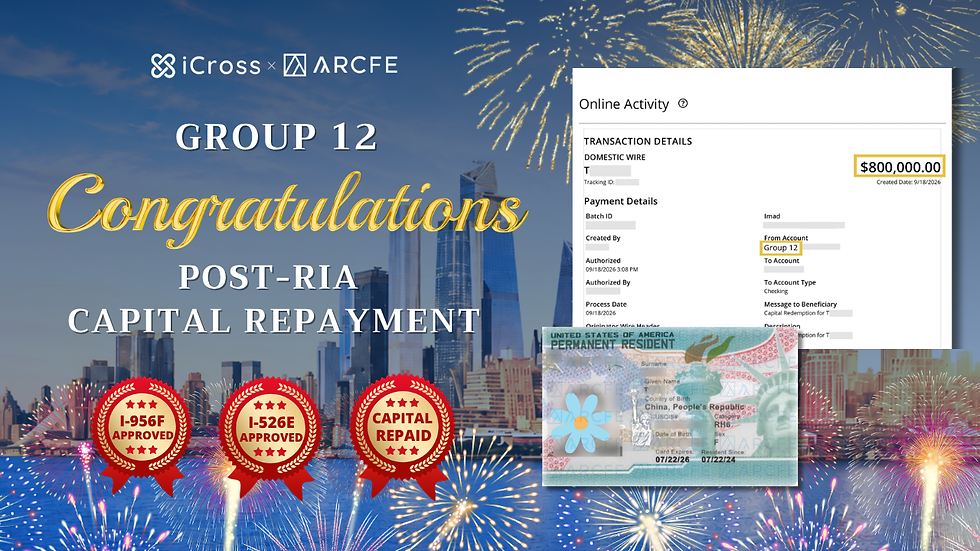
Recent ARCFE EB-5 Principal Repayment Highlights
Explore ARCFE’s latest EB-5 principal repayment milestones across pre-RIA and post-RIA projects. Click any image below to read the full project update.

Explore Current New York Real Estate-Backed EB-5 Opportunities


Considering EB-5 for Your Family?
Speak with an iCross × ARCFE EB-5 specialist to discuss your immigration goals, timeline, and available investment opportunities.
Related ARCFE Resources
Review important travel, residency, tax and immigration considerations after receiving a conditional green card.
Understand how senior debt, mezzanine financing and equity differ in repayment priority and risk exposure.


