Why Location & Market Demand Matter In An EB-5 Investment


When evaluating an EB-5 investment, many investors naturally focus on immigration outcomes, such as project approvals, job creation, and the likelihood of obtaining permanent residency. While these are undoubtedly critical factors, the underlying project deserves just as much attention.
At its core, an EB-5 investment is still an investment. The project’s location and the market demand surrounding it can significantly influence construction progress, project success, loan repayment, and ultimately the return of investors’ capital.
Location Is More Than An Address
In real estate, location has long been considered the single most important factor. Projects situated in strong, established markets generally benefit from:
Higher demand from buyers or renters
Better access to transportation and employment opportunities
Stronger long-term property values
Greater resilience during market fluctuations
These characteristics help support a project’s financial performance and provide multiple exit opportunities for developers and lenders. Conversely, projects located in weaker or oversupplied markets may face slower sales, higher vacancies, or extended development timelines, increasing execution risk.

Demand Drives Project Success
A well-located project is only one part of the equation. Equally important is whether there is sufficient market demand for what the project is offering.
Even the best-designed development can struggle if there is inadequate demand from its intended users. Before investing, it is important to understand questions such as:
Is the neighborhood experiencing population and employment growth?
Are comparable projects selling or leasing successfully?
Is there limited supply relative to demand?
Are major employers, infrastructure improvements, or economic developments supporting future growth?

It’s also important to recognize that demand varies.
For residential developments, demand is driven primarily by homebuyers and renters. Markets with strong employment, population growth, and limited housing supply tend to provide a more favorable environment for residential projects.
Hospitality projects, such as hotels and resorts, rely on different demand drivers, including tourism, business travel, conventions, and consumer spending. While these projects may perform well in strong economic environments, they can also be more sensitive to economic downturns. During periods of reduced travel or weaker consumer confidence, lower occupancy rates and declining revenues may make it more difficult for these projects to achieve their financial projections.
This does not necessarily mean that one type of EB-5 project is inherently better than another. Every project should be evaluated on its own merits, taking into account its location, market fundamentals, financing structure, and the experience of the people behind the project. However, understanding what drives demand, and how those demand drivers may perform under different economic conditions, can help investors better assess a project’s long-term prospects.
A project supported by strong, sustainable demand is generally better positioned to generate revenue, meet financing obligations, complete construction successfully, and create the economic activity that supports both project success and EB-5 job creation.

Why This Matters For EB-5 Investors
For EB-5 investors, a successful project serves two important purposes. First, it supports the business activity that creates the required jobs for immigration purposes. Second, it strengthens the project’s financial performance, which is an important consideration when evaluating the likelihood of capital repayment. While no EB-5 investment can guarantee repayment, projects in fundamentally strong markets often have greater financial flexibility and multiple paths to successful completion.
Looking Beyond Today’s Market
Real estate development typically spans several years. Investors should therefore evaluate not only current market conditions but also the long-term outlook for the project location. Markets with growing populations, expanding employment opportunities, continued infrastructure investment, and limited development land often demonstrate stronger long-term fundamentals than markets experiencing stagnation or population decline. A project should be positioned to remain competitive not only when construction begins, but also when it reaches completion.

Why NYC Continues To Stand Out
Not all real estate markets respond to economic cycles in the same way. While no market is immune to changing conditions, NYC has historically demonstrated remarkable resilience due to its diverse economy, limited developable land, global appeal, and consistent demand for both housing and commercial space.
As one of the world’s leading financial, business, education, and cultural centers, NYC attracts a steady influx of residents, students, professionals, and international investors. This broad economic base helps support long-term real estate demand across multiple asset classes rather than relying on a single industry.
While market cycles inevitably occur, projects located in fundamentally strong neighborhoods may be better positioned to adapt than projects in markets with weaker long-term fundamentals. For EB-5 investors, these characteristics can be particularly meaningful. Real estate developments often require several years to complete, making it important to invest in markets that have demonstrated the ability to weather changing economic conditions over time.
Long Island City: A Case Study In Market Flexibility
Within NYC, Long Island City (LIC) has emerged as one of the city’s fastest-growing neighborhoods. Located just minutes from Midtown Manhattan and served by multiple subway lines, LIC has transformed into a vibrant mixed-use community with new residential developments, office space, retail, parks, and waterfront amenities.
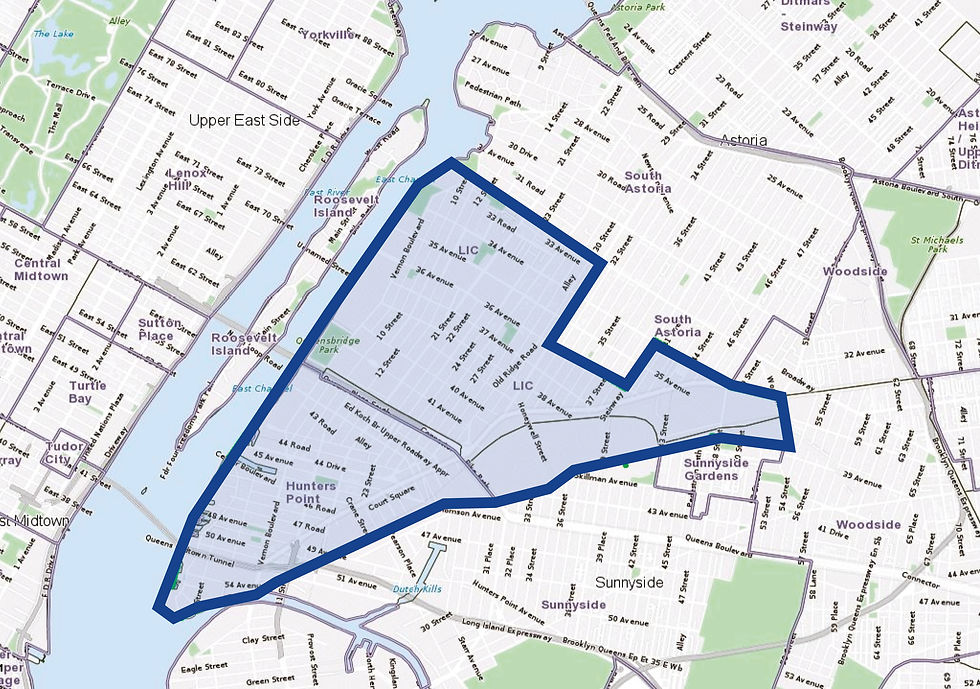
One of LIC’s distinguishing characteristics is the depth of demand across multiple housing segments. The neighborhood has developed into both a strong condominium sales market and one of NYC’s most active rental markets. This diversified demand provides developers with greater flexibility throughout a project’s lifecycle.
For example: if condominium sales slow because of changing market conditions, developers may have the ability to lease units until market conditions improve. Conversely, when buyer demand strengthens, condominium sales can provide another avenue for project monetization. While market conditions ultimately determine which strategy is most appropriate, having multiple potential exit paths can offer greater operational flexibility than projects dependent on a single source of demand.

Questions Investors Should Ask
Before making an EB-5 investment, investors should look into:
What makes this location attractive?
What evidence supports long-term demand?
How has the local real estate market performed historically?
Who are the project’s target buyers or tenants?
What is the developer’s strategy if market conditions change?
How does the project’s location compare with competing developments?
These questions help investors better understand the project’s underlying fundamentals to better understand what conditions need to be met in order for the investment to be successful and for the capital to be returned.
Award-Winning RC With Over A Decade Of Experience
ARCFE is an award-winning EB-5 Regional Center with more than a decade of experience in real estate financing and immigration investment management. Founded by iCross Capital, - a NYC-based real estate financing institution with nearly 20 years of lending experience, ARCFE brings institutional-quality underwriting and disciplined risk management to the EB-5 projects and services we offer. In 2025, iCross Capital was ranked #35 among 105 New York City construction lenders by PincusCo, reflecting its established presence in one of the world's most competitive real estate markets. In addition to the 20+ EB-5 projects managed under ARCFE, iCross Capital has successfully financed 60+ investment funds and real estate projects across NYC, boasting 100% project success rate and 100% repayment rate to all eligible investors.
Originally designated by the USCIS in 2013 and redesignated under the EB-5 RIA in 2022, ARCFE has established a strong track record in managing EB-5 investments across NYC and New Jersey. Our team brings together professionals from the immigration, real estate, and financial industries, including team members with CFA and CPA credentials, providing investors with a multidisciplinary approach to both immigration and investment plans.
Speak with our EB-5 specialist today and learn how the program can help you achieve permanent residency.